


One of the most common questions we hear from prospective cruisers is: “Are catamarans really safe offshore?”
For decades, there has been ongoing debate between monohull sailors and catamaran owners about seaworthiness, safety, comfort, and offshore capability. Much of the skepticism surrounding catamarans comes from outdated designs, racing multihulls, or misconceptions repeated dockside for years.
The reality is that modern cruising catamarans have evolved dramatically. Today’s offshore catamarans are designed with safety, stability, comfort, and long-distance passagemaking in mind. Thousands of sailors are successfully crossing oceans every year aboard cruising catamarans, including the Atlantic and Pacific Oceans.
Like any offshore vessel, safety ultimately comes down to preparation, seamanship, maintenance, and respecting weather conditions. But modern catamarans offer several unique advantages that make them exceptionally capable offshore platforms.
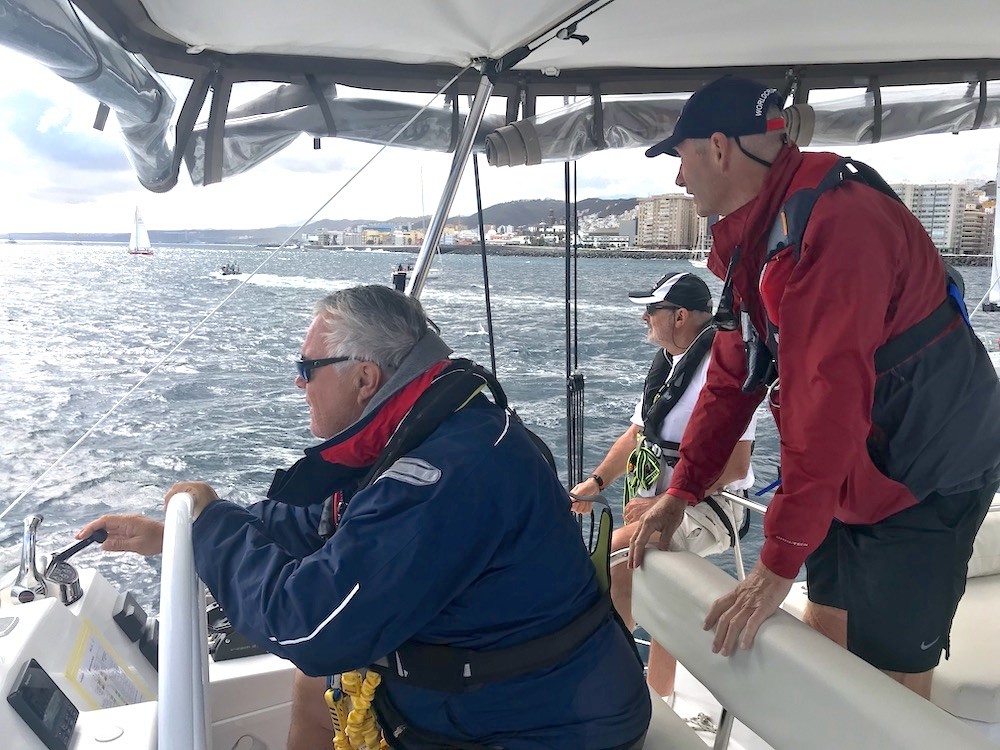
How Safe Are Catamarans For Blue Water Sailing? But What If They Capsize?
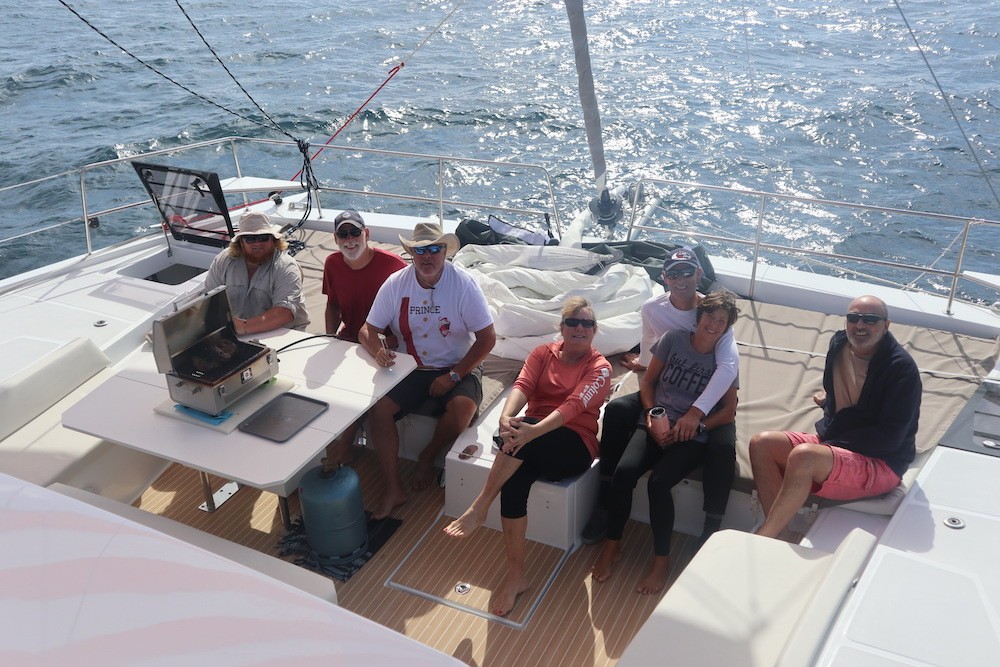
“I have heard concerning stories about cats flipping in strong winds”. These questions comes up more often as more people are sailing and chartering catamarans. People generally love the comfort, space and performance of a catamaran, but are concerned about the safety of a catamaran versus a monohull on the open ocean. We had a 45 ft monohull that we cruised on for 34,000 NM and we have now done about 25,000 NM miles on different cats, all in different conditions and oceans. We have been in very bad weather in both and they are both survivable. We cruise on our catamaran with a sea anchor (a 15 ft diameter parachute) in case of a storm and quite frankly, when we’re hanging on the sea anchor we are as safe as any monohull in similar conditions.
Many experts in the industry, including Mark Elkington and Jon Morris of McConaghy Boats, agree that the fear of cruising catamarans capsizing is often greatly exaggerated. Modern cruising catamarans are designed with strict stability criteria, incorporating low centres of gravity, wide beam, and carefully balanced power-to-weight ratios that make lifting a hull extremely difficult under normal cruising conditions. In the vast majority of cases, capsize incidents are associated with extreme weather, excessive sail carried for the conditions, or poor sail handling — particularly when sails are trimmed too aggressively and not reduced early enough.
Catamarans Can Outrun Bad Weather
With today’s advanced weather forecasting technology, there is rarely a need to be caught in severe conditions. Modern cruising catamarans are capable of consistent 200–220 mile days on passage, giving crews the ability to alter course, accelerate ahead of weather systems, or position themselves more favorably to avoid the worst of approaching storms. Their speed and range provide a significant safety advantage when combined with prudent passage planning and good seamanship.
I remember when we once surfed down a massive wave in a 40-foot catamaran just off Saint Helena near the West African coast. The boat simply accelerated down the face of the wave — an unsettling feeling, no doubt, but never truly dangerous.
Estelle Cockcroft
Catamaran Sailing Requires More Careful Seamanship
In severe conditions, handling a catamaran does require good seamanship and proper sail management. However, modern cruising catamarans have evolved into extremely seaworthy vessels and do not simply “flip” under normal circumstances. Their wide beam, buoyancy, and stability characteristics make capsizing highly unlikely when sailed prudently. In many situations, excessive loads are more likely to result in damaged sails or rigging long before the boat reaches its capsize limit. In reality, most modern cruising catamarans that encounter trouble do so because of extreme weather, carrying too much sail for the conditions, or poor decision-making rather than any inherent instability in the design itself.
Sea Action And High Winds Cause Capsizing
We do know of a couple of instances where large waves off Richards Bay on the East coast of South Africa and one off the Wildcoast of South Africa capsized catamarans. However, a monohull in similar conditions would also have capsized but it would have self righted because of its lead keel. A catamaran will not self right, however there is some comfort in the fact that modern catamarans have positive buoyancy, so if you capsize or fracture a hull, you will not sink like a mono hull can. You could stay with the vessel for shelter and protection until you are rescued. Survival of the crew in that case is much elevated. The risk of capsizing is something we are prepared to live with (it could happen on any boat) and if you sail your catamaran conservatively, this should not even be an issue. Racing Catamarans often capsize because they are little more than Hobie Cats driven to the edge under extreme conditions, so it really should not be in this discussion.
Catamarans Have Redundancy
Another important safety advantage of cruising catamarans is redundancy. Most cruising catamarans are equipped with twin diesel engines, so the loss of one engine is usually an inconvenience rather than a critical emergency. I experienced the opposite situation while cruising a monohull in the Mediterranean off the coast of France, where an engine failure close to shore made maneuvering around hazards and into a crowded anchorage considerably more challenging. On a catamaran, a single engine is typically still sufficient to maintain steerage, maneuver safely, generate electrical power, and charge batteries, allowing the vessel to continue operating safely until repairs can be made.
Crew Fatigue Is A Safety Issue
The last issue concerning safety is tired, over worked crew. Crew “fatigue” is negligible on a catamaran. You generally get a good sleep even in rough seas. Sail changes and reefing is much easier and safer as you operate on a more stable and flat platform and the risk of serious injuries and falling overboard is diminished considerably. Fresh and alert crew contributes to a much safer vessel.
I was once a dyed in the wool monohull guy until I had the opportunity to spend time on catamarans and it did not take me long to get it. Catamarans are fast, stable, comfortable and as safe as any vessel out there.
Stephen Cockcroft
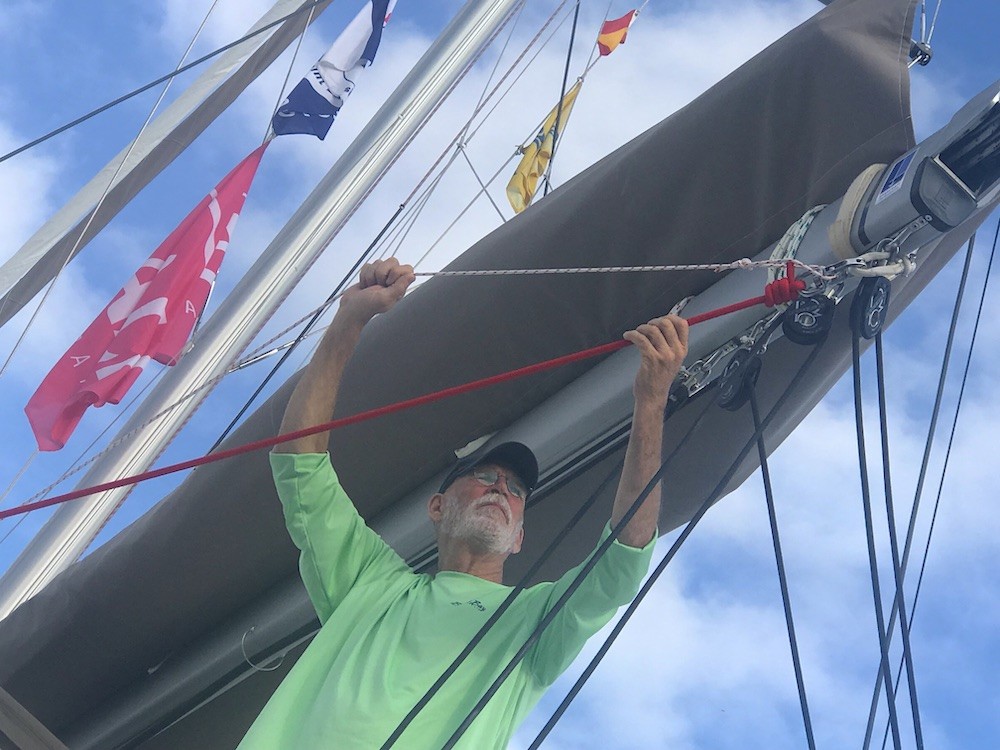
The Reality of Offshore Catamaran Safety
Modern cruising catamarans have proven themselves as safe, capable offshore vessels for long-distance cruising and ocean crossings around the world. They offer:
- Exceptional stability
- Reduced crew fatigue
- Faster passagemaking
- Excellent comfort offshore
- Redundant systems and maneuverability
- Strong modern construction
Like any yacht, they require proper preparation, responsible seamanship, and respect for weather conditions. But the outdated belief that catamarans are inherently unsafe offshore simply does not reflect the reality of modern cruising multihulls.
After tens of thousands of offshore miles on both monohulls and catamarans, we believe modern cruising catamarans are among the safest and most comfortable platforms available for long-distance passagemaking when sailed responsibly and prepared properly.
Want to build your offshore confidence and gain real-world sailing experience?
The Catamaran Gurus Sailing Academy offers hands-on training, offshore passage opportunities, and internationally recognized RYA courses designed to help sailors develop the skills needed for safe and confident cruising.
Whether you are new to sailing or preparing for bluewater passagemaking, our experienced instructors can help you take the next step toward your cruising goals.
Learn more about the Catamaran Gurus Sailing Academy or contact us to discuss upcoming courses and offshore training opportunities.